ServicesFlat Roofing
Flat Roofing in Buckeye
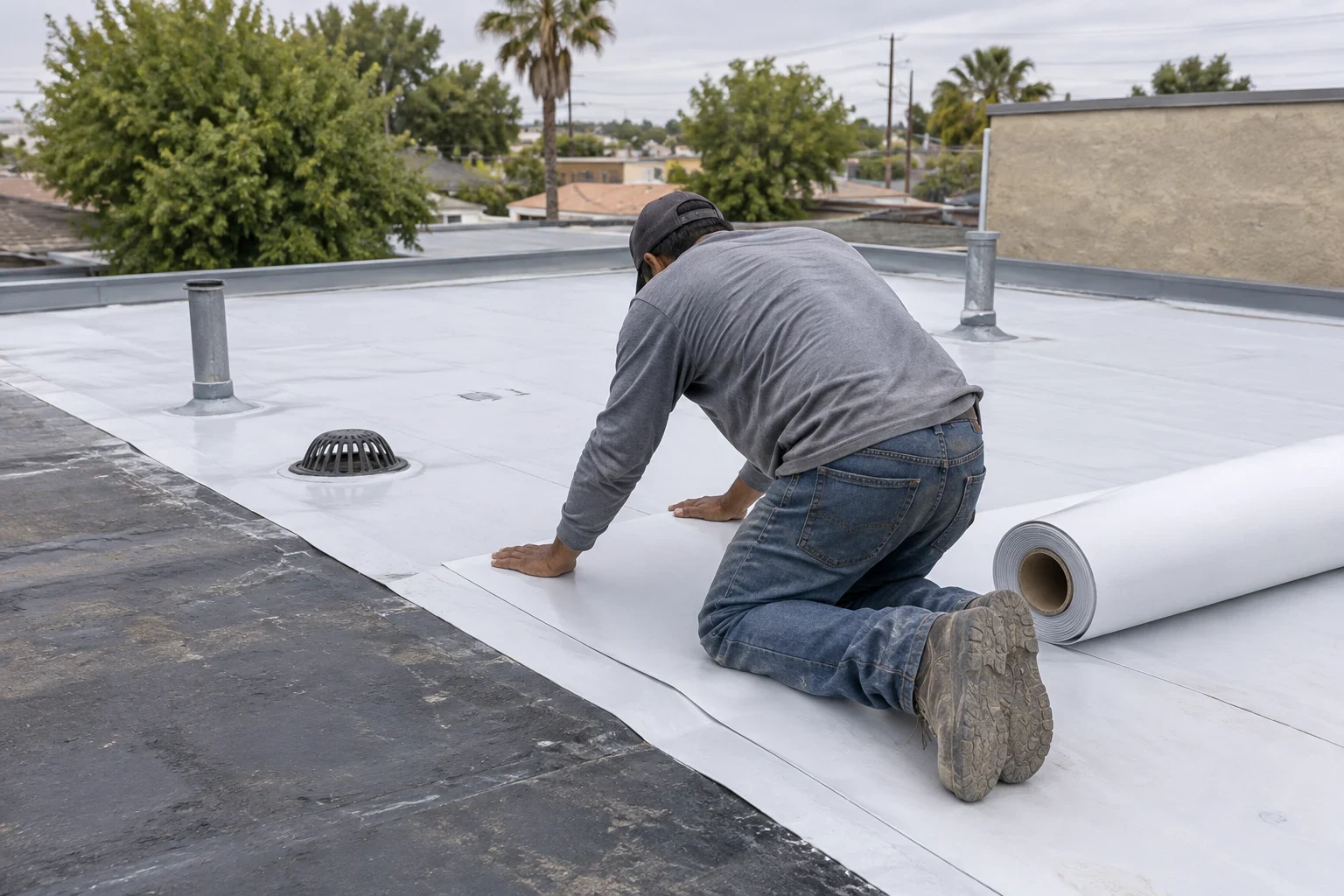
We install and replace flat and low-slope roofs in modified bitumen, TPO and reflective coating systems. Before you choose, we explain how each one handles sun, heat and standing water, so the system you pick fits the way your home actually drains.
Low-slope roofs need their own material list
Plenty of homes have flat or nearly flat sections: the main roof on a Santa Fe or Pueblo-style house, a patio cover, a garage addition, a room tucked behind a parapet wall. Water moves slowly across these surfaces, so shingles and tile are the wrong answer. A flat roof needs a continuous membrane that stays watertight even when water sits on it for a while.
We work in three main systems. Modified bitumen is a thick, layered sheet with a granulated cap that shrugs off foot traffic. TPO is a white single-ply membrane with heat-welded seams that reflects a lot of sunlight. Elastomeric and silicone coatings can renew a sound existing roof without a full tear-off. If spray foam suits your roof better, we cover it on our Foam Roofing page.
Each one has trade-offs in cost, lifespan and upkeep. We lay them out plainly and let you decide.
What a flat roof project with us includes
- A side-by-side comparison for your roof
- We explain how modified bitumen, TPO and a coating system would each perform on your slope and layout. You see the options together, with our reasoning, before anything is quoted.
- Full tear-off to a sound deck
- Old layers come off completely, so the new membrane never sits over trapped moisture. Any soft or delaminated sheathing gets replaced, giving the roof a dry, solid base.
- Drainage corrections
- Where water has been pooling, we add tapered insulation or small crickets to push it toward the scuppers and drains. Scupper flashing is reset so water leaves the roof cleanly.
- Parapet and penetration flashing
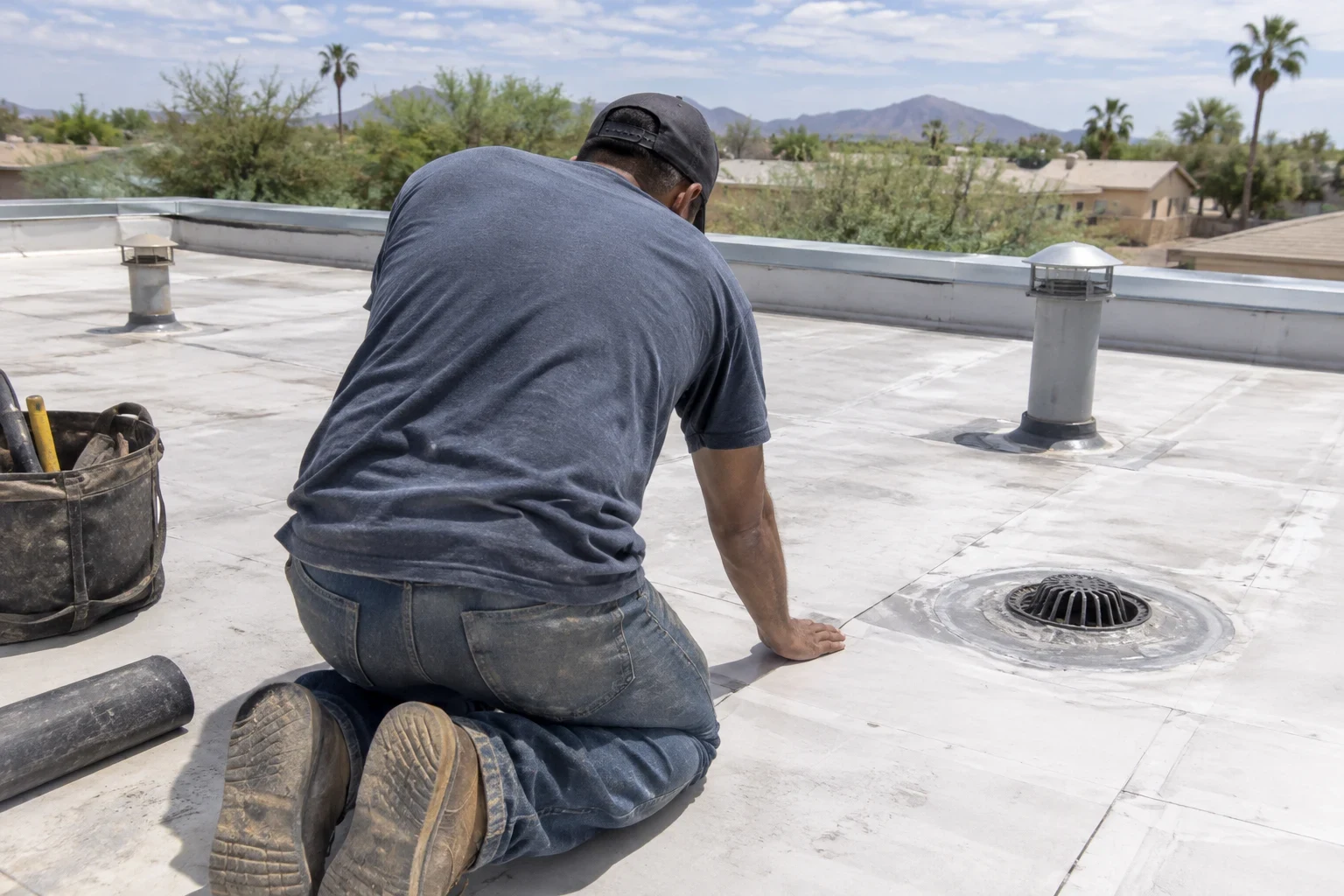
- Most flat roof leaks start at the edges, not the middle. We wrap parapet walls and seal around AC curbs, vent pipes and skylights with flashing matched to the membrane.
- A reflective finish
- White TPO or a reflective coating over a cap sheet cuts the heat the roof soaks up. Through a Buckeye summer, that can make the rooms underneath noticeably easier to cool.
- Careful cleanup
- We protect landscaping and equipment during the work, haul away debris and run a magnet across the yard and driveway for stray fasteners.
Signs your flat roof is ready for attention
Water that lingers
Ponds still standing two days after rain mean the drainage or the deck has sagged. Standing water speeds up wear on almost every membrane.
Blisters and bubbles
Raised pockets in the surface usually mean moisture or air trapped between layers. They tend to split open under heat.
Cracking or alligatoring
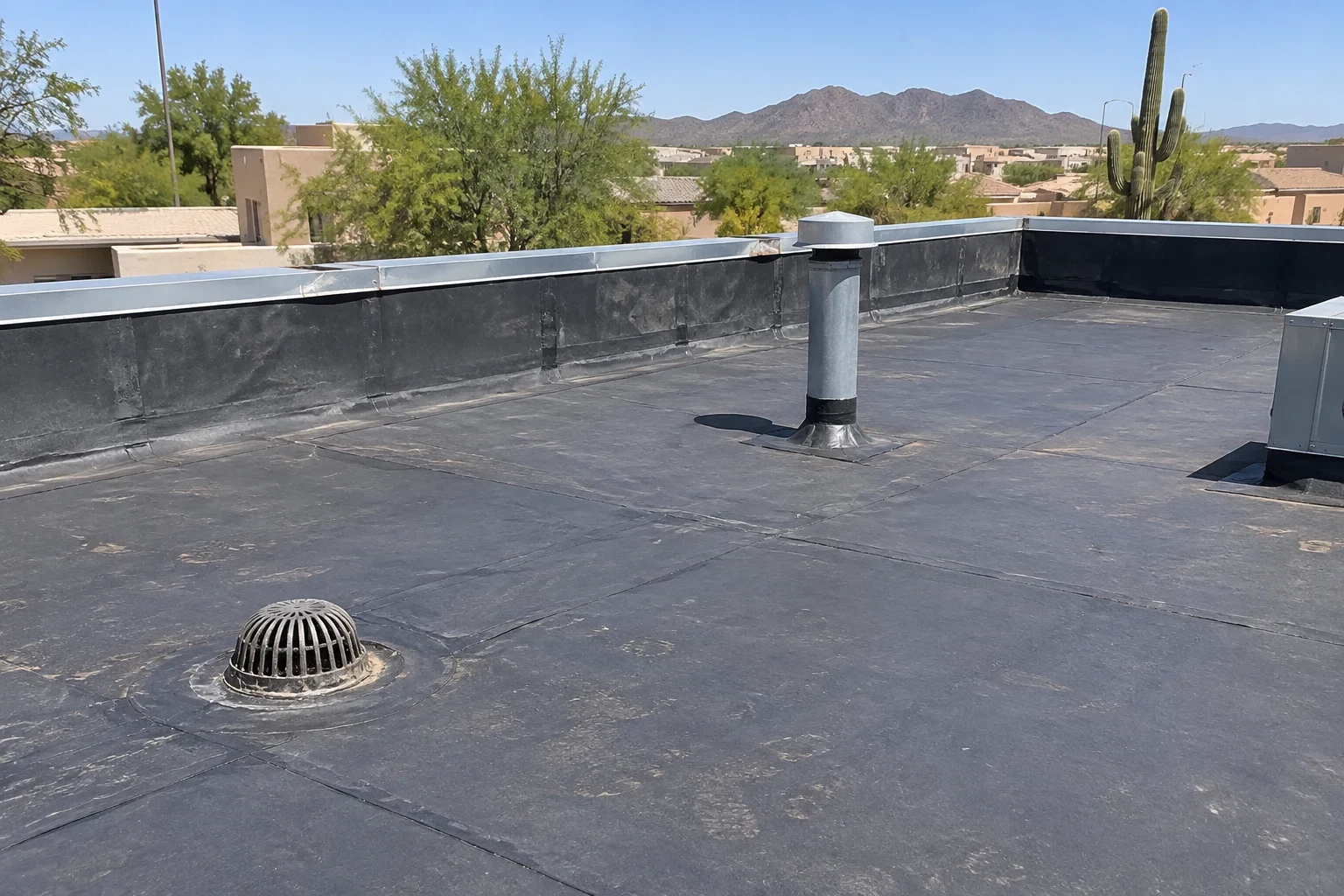
A surface that looks like dried mud, or shows exposed fabric, has lost its protective top layer to UV.
Seams pulling at the parapet
Gaps where the membrane meets the wall let water run behind the flashing and into the framing.
Stains below a flat section
Ceiling marks under a patio cover or addition after a monsoon rain point to water finding a path through the roof above.
What moves the price of a flat roof
Flat roof pricing comes down to what is on top, what is underneath and how water needs to move. Every line in the quote is explained. If tear-off uncovers damage nobody could see beforehand, we pause, share photos with you and agree on the next step before any added work begins.
Size and number of sections
One large roof costs less per square foot than several small ones, since each separate section needs its own edges and flashing.
Membrane or coating
Coatings over a sound roof usually cost the least up front. Modified bitumen and TPO mean a full new membrane and more labor.
Old layers and deck condition
Multiple layers of old roofing take longer to remove, and any rotted sheathing has to be replaced.
Drainage changes
Adding tapered insulation or crickets to fix ponding adds board and labor, but it often decides how long the new roof lasts.
Parapets and penetrations
Tall parapet walls, several AC curbs and skylights all add detailed flashing work.
How the work runs
- 1
Phone call and site visit
We talk through what you are seeing, then visit to measure, check the slope and drainage, and look at the deck condition where we can.
- 2
Written quote with options
You get a line-item quote showing each suitable system, what the work includes and what could change the scope once the old roof is open.
- 3
Prep and tear-off
We protect plants, AC units and walkways, then remove the old roofing. Work starts early in the day so adhesives and seams go down in workable temperatures.
- 4
Installation and flashing
Insulation or tapered board goes down first, then the base layers, membrane and edge flashing. Seams are welded or sealed and checked as we go.
- 5
Water check and walkthrough
We run water toward the drains to confirm it flows off, then walk you through the finished roof with photos of what we found and fixed.
Flat roofing questions
Which flat roof system holds up best in this heat?
There is no single winner. TPO reflects the most sunlight and has welded seams, while modified bitumen is tougher underfoot and forgiving around complicated edges. If your roof gets regular foot traffic for AC service, we often lean toward modified bitumen. We will tell you which way we would go on your roof and why.
Can you coat my existing flat roof instead of replacing it?
Sometimes. A coating only makes sense over a membrane that is still dry, firmly bonded and shedding water the way it should. When there is trapped moisture, widespread blistering or soft decking underneath, a coat on top just covers the problem, and we will tell you that plainly.
Does a torch-down roof mean open flame on my home?
Not necessarily. Many modified bitumen systems now use self-adhered sheets that bond without a torch. We choose the method based on the roof, what sits nearby and the details at your parapets.
How long does a flat roof replacement take?
A patio cover or small addition is often done in a day. A full low-slope roof usually takes a few days, depending on layers, deck repairs and drainage work. We give you a realistic schedule with the quote.
Do I need a permit for a new flat roof?
A full replacement generally requires a permit from the city or county. We pull it and arrange the required sign-off, so you do not have to handle the paperwork.
Can a flat section be tied into my tile or shingle roof?
Yes. Where a flat roof meets a pitched one, we flash the transition so water from the steeper roof runs over the membrane instead of under it. Our Tile Roofing and Shingle Roofing pages cover those roofs in more detail.
Pick the right membrane for your flat roof
Tell us about the flat section on your home and what you have noticed. We will walk through the materials that suit it and set up a visit.