ServicesFoam Roofing
Foam Roofing in Buckeye
Spray foam gives a flat or low-slope roof one continuous, insulated layer with no seams to open up. We explain how the foam and its protective coating work together, which coating suits your home, and what upkeep keeps the roof sound for the long run.
What a Foam Roof Is and When It Makes Sense
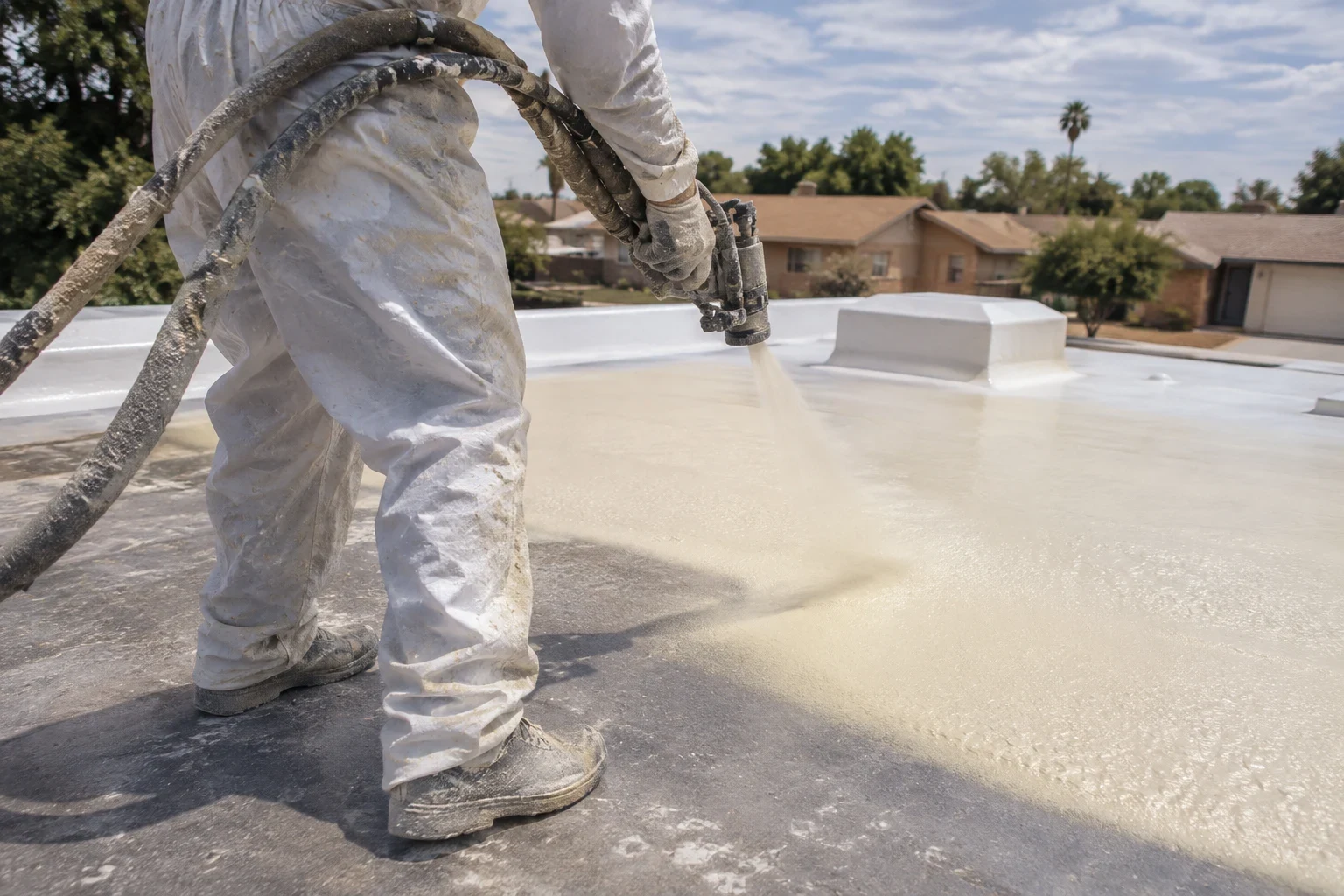
A foam roof starts as two liquids mixed at the spray gun. They expand within seconds into rigid, closed-cell polyurethane that bonds to the deck below. Because it goes on as one sheet, there are no laps or seams, and we can build it up thicker in low spots so water moves toward the drains instead of sitting.
Foam on its own breaks down in sunlight, so it is always finished with an elastomeric coating, usually acrylic or silicone, often with mineral granules pressed into the last coat. That coating is the part that faces the weather. Under strong desert sun, a bright white coating reflects heat and the foam beneath adds real insulation to the ceiling below.
Foam is a good fit for flat-roofed homes, patio covers and additions with little pitch. If your roof is steep, tile roofing or shingle roofing is the better conversation, and we will say so.
What Our Foam Roofing Work Includes
Moisture check of the existing roof
Foam must go over a dry surface. We check the old roof for wet insulation or soft decking before deciding whether to spray over it or remove it first.
Surface prep and priming
Loose gravel, failed coating and debris are cleared, edges are cleaned, and a primer goes down where the surface needs better adhesion.
Foam built to thickness and slope
We spray in passes to an even, measured thickness and add extra foam where water has ponded before, so the roof drains toward scuppers and drains.
Coating in base and top coats
The coating goes on in separate coats, a different color for each where practical, so we can see full coverage. Granules can be added for foot traffic and extra UV protection.
Details at curbs and parapets
Air conditioner curbs, vent pipes, skylights and parapet walls get foamed and coated as part of the same layer, which is where seamed roofs usually leak.
Overspray protection and cleanup
Spray foam travels on the wind, so we mask walls, windows and nearby vehicles and work only when the breeze allows. The site is cleared of masking and debris at the end.
Signs Your Foam Roof Needs Attention
- Tan or brown foam showing
- Bare foam means the coating has worn through. Sunlight will start eroding the foam itself, so recoating soon is far cheaper than replacing foam later.
- Chalky or thin coating
- If your hand comes away white after brushing the surface, the coating is weathering. It is a normal stage, and the right time to plan a recoat.
- Blisters or soft spots
- Raised bubbles or areas that give underfoot can mean moisture trapped below the foam or a loss of bond. These need to be opened and checked.
- Water that stays after rain
- Ponding that lingers more than a day or two wears coating faster. Extra foam can usually correct the slope.
- Pecked holes or cracks
- Birds sometimes peck at foam, and cracks can open around parapets and curbs. Small damage is a simple repair if it is caught early.
How a Foam Roof Job Runs
- 1
Look at the roof and talk options
We walk the roof, check for moisture and explain whether a recoat, a spray-over or a full tear-off is the honest answer. You get a written, line-item estimate.
- 2
Prep the roof and protect the property
On work day, the crew cleans and primes the surface and masks anything overspray could reach. We start early, while temperatures and wind are workable.
- 3
Spray the foam
Foam goes on in passes to the planned thickness and slope. It firms up within minutes, and the crew checks thickness as they go.
- 4
Coat, finish and clean up
Base and top coats follow once the foam is ready, with granules if chosen. We remove masking, clear the site and walk you through the upkeep the coating will need.
What Moves the Price of a Foam Roof
Foam is priced mainly by area, but the condition of what is underneath matters just as much. Two roofs of the same size can differ a good deal once tear-off and coating choice are settled. We itemize each part so you can see where the cost sits.
- Spray-over or tear-off
- A dry, sound existing roof can often be foamed over. Wet insulation or damaged decking has to come out first, which adds labor and disposal.
- Foam thickness
- Thicker foam adds insulation and is needed to correct poor drainage, so it uses more material.
- Acrylic or silicone coating
- Acrylic costs less upfront and suits most well-drained roofs. Silicone holds up better where some ponding remains, at a higher material cost.
- Roof details and access
- Many curbs, parapets, skylights or a hard-to-reach roof take more time to mask, spray and finish.
- Permits
- When the job calls for a permit, we pull it, and that cost is listed on the estimate.
Foam Roofing Questions
- How long does a foam roof last?
- The foam itself can last a very long time if it stays covered. The coating is what wears, so the life of the roof depends on recoating when the surface turns chalky or thin. A roof that is recoated on time rarely needs new foam.
- Can you spray foam over my existing flat roof?
- Often, yes, if the old roof is dry and well attached. We check for trapped moisture first. Foam sprayed over wet material will blister, so in that case we remove the wet sections before spraying.
- Should I choose acrylic or silicone coating?
- Acrylic is a solid choice for roofs that drain well and is easy to recoat later. Silicone resists standing water better but is harder to recoat with other products. We look at how your roof drains before recommending one.
- Do I need to leave the house while you spray?
- Most people stay home. We ask that windows stay closed and that rooftop air intakes be shut off while spraying, since the mixing foam gives off fumes for a short time. Pets do best indoors that day.
- Can I walk on a foam roof?
- Yes, for normal service visits such as checking the air conditioner. Adding granules to the top coat makes the surface tougher. Avoid sharp tools and heavy point loads, which can puncture the coating.
Find Out What Your Flat Roof Needs
Tell us about your roof, how it drains and what you are seeing on the surface. We will explain whether a recoat, a spray-over or new foam fits, and how foam compares with other options on our Flat Roofing page.