ServicesRoof Replacement
Roof Replacement in Buckeye
If your roof is worn through, more patches only delay the bill. We strip tile, shingle, foam and flat roofs down to the deck and rebuild them, and we explain how each covering compares so the new roof fits your home and how long you plan to stay.
When replacement is the right call
Most roofs don't fail all at once. The covering wears, the underlayment beneath it dries out, and small leaks start showing up in new places. Once repairs are chasing the same problem across several areas, a full replacement usually costs less over the next decade than a string of fixes. If the damage is limited, we will say so and point you to roof repair instead.
Replacement is also the moment to reconsider the material. Concrete tile, architectural shingle, spray foam and modified bitumen each handle strong sun, sudden rain and attic heat differently. We explain how each one behaves, what it weighs, how it is maintained and how it compares on cost, then let you decide.
On many Buckeye homes the tile itself is still sound while the felt underneath has cracked from years of summer heat. In that case we can often lift the existing tile, install new underlayment and relay the same tile, keeping the look of your home and saving the cost of new tile.
What a full replacement includes
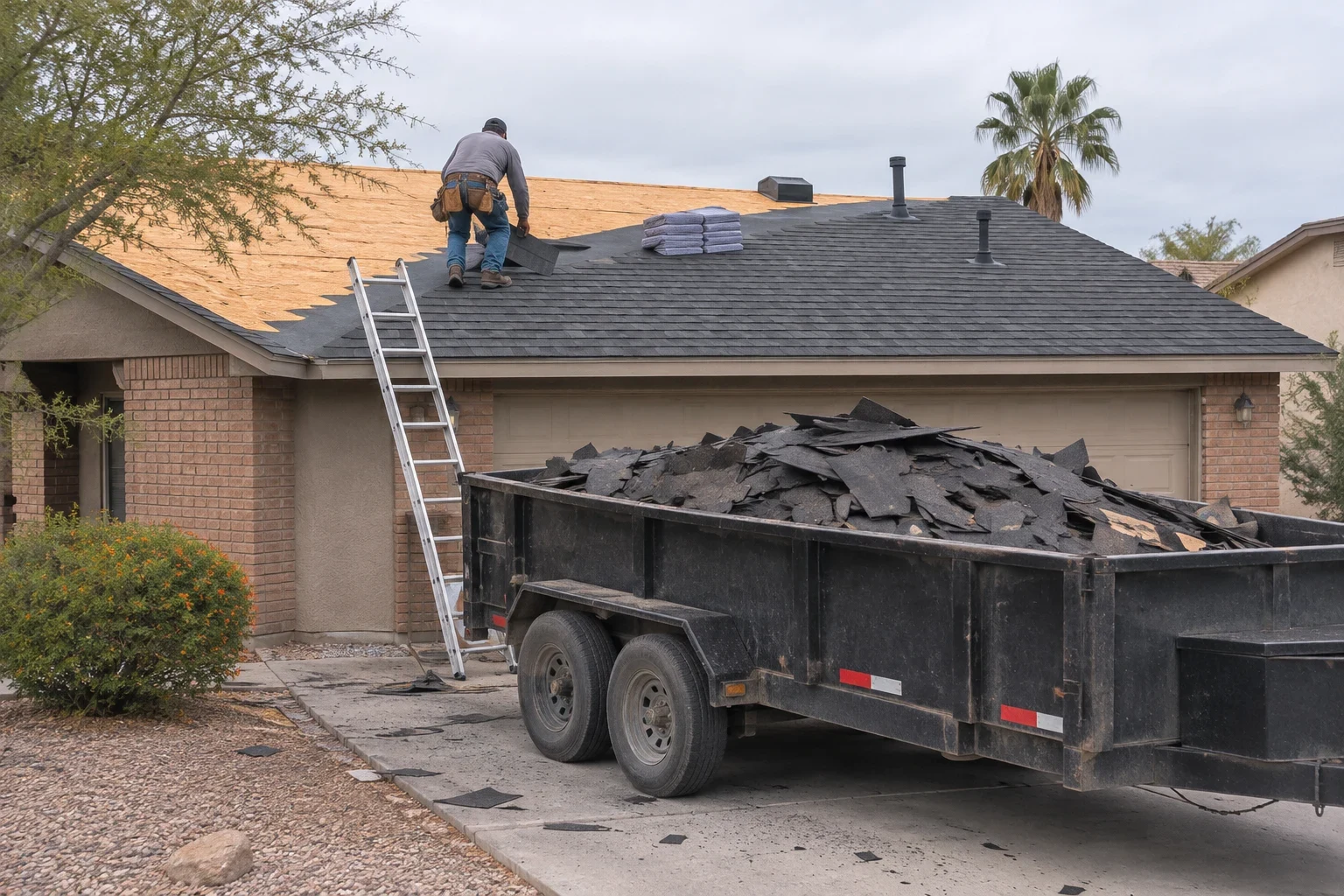
Tear-off to the deck
We remove the old covering, underlayment and fasteners rather than layering over them. That lets us see the deck and fix what is hiding under it.
Deck repair
Soft or delaminated plywood and OSB sheets are cut out and replaced. A new roof is only as flat and secure as the surface it is fastened to.
Underlayment matched to the covering
Tile, shingle and low-slope roofs each call for a different underlayment. We choose one rated for the heat it will see under that covering, not a one-size product.
New flashing at every joint
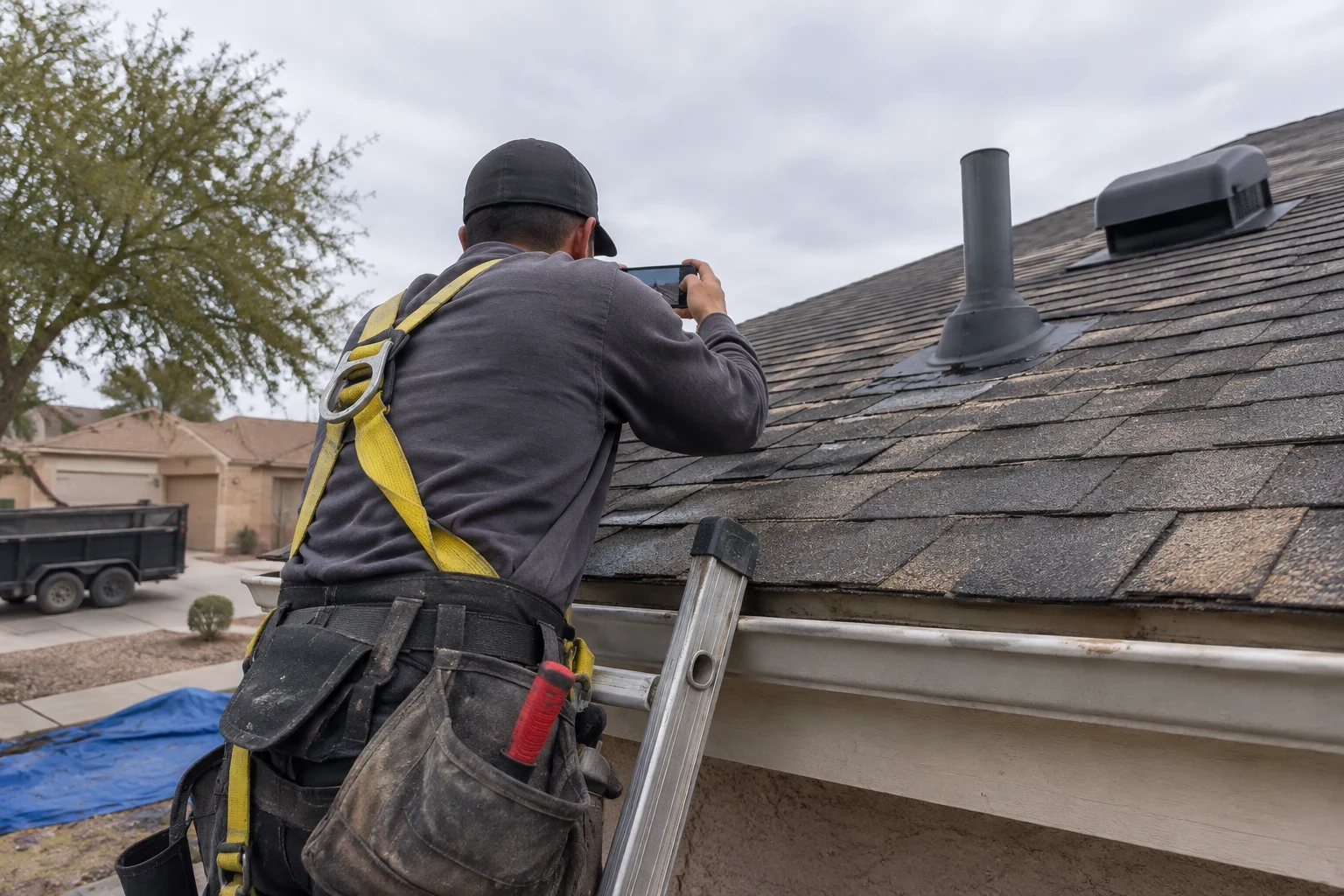
Valleys, wall flashing, pipe jacks and roof vents are replaced, not reused. Most leaks on older roofs start at these joints.
Attic ventilation
We look at intake and exhaust venting and correct it where it falls short. Good airflow keeps attic heat down and helps the new roof last longer.
Daily cleanup and nail sweep
Debris goes into a bin each day, and we run magnets across the yard, driveway and planting beds for loose nails before we leave.
Signs your roof needs replacing, not repair
- Stains in several rooms
- A single drip near a vent can usually be fixed on its own. When ceiling stains turn up in different rooms, the underlayment has often failed across the whole roof.
- Bare or curled shingles
- Shingles that have shed their granules or curled at the edges no longer shed water or reflect heat the way they should.
- Brittle felt under the tile
- Broken tiles are easy to swap, but if the paper beneath crumbles when touched, the roof's real waterproof layer is gone.
- Blisters or ponding on a flat roof
- Bubbles, open seams and water that sits for days after a monsoon storm point to a membrane or foam surface near the end of its life.
- A sagging roofline
- A dip along the ridge or between rafters suggests decking or framing damage that should be opened up and corrected.
- Age plus repeated repairs
- If you have paid for several repairs in a few years and the roof is near its expected lifespan, replacement is usually the better use of your money.
How a replacement job runs
- 1
Look at the roof and compare options
We walk the roof, check the attic and the decking where we can reach it, then sit down with you to compare tile, shingle, foam and low-slope coverings. Your written estimate breaks out tear-off, decking, underlayment, flashing and the permit separately, so nothing is folded into one lump sum.
- 2
Permit and scheduling
We pull the permit and set the work date. In summer we start at first light so the crew is off the hottest part of the roof by early afternoon.
- 3
Protecting your property
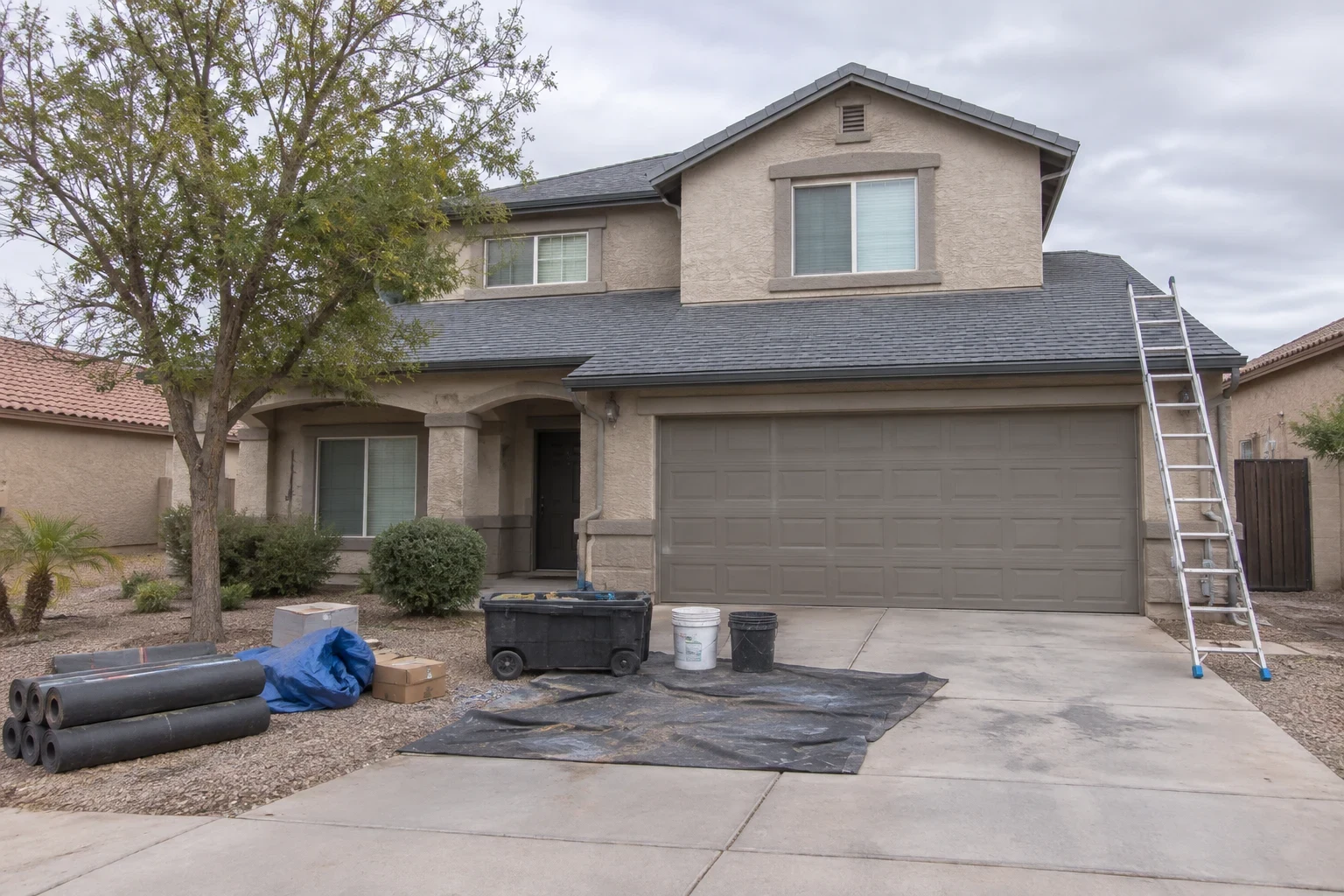
Before tear-off we tarp landscaping, AC units and patios, and place the bin where it won't block your garage.
- 4
Tear-off and install
Most shingle roofs are stripped and covered in a day or two; tile and foam take longer. Each section is dried in the same day it is opened, so your home is never left exposed overnight.
- 5
Final walk-through
After the permit inspection is signed off, we walk the finished roof with you, show photos of the decking and flashing we replaced, and leave the property swept.
What moves the price of a new roof
Every replacement is priced from the roof itself, so we don't quote a number until we have seen it. The total comes from a handful of things, and we list each one separately so you can see where the money goes.
- Material choice
- Shingle is generally the least expensive to install, concrete tile costs more but lasts for decades, and foam is a strong fit for low-slope roofs. A tile relay can lower the cost when your existing tile is reusable.
- Roof size and pitch
- More square footage means more coverage and more labor time. Steep pitches need extra safety setup and move more slowly.
- Condition of the deck
- Rotted or soft sheathing is replaced by the sheet. We photograph what we find and explain it before we replace it.
- Layers to remove
- Two layers of old shingle, or heavy tile, take longer to strip and haul away than a single layer.
- Details and permits
- Skylights, chimneys, multiple valleys and the permit fee all add to the total.
Roof replacement questions
- How long does a roof replacement take?
- A typical shingle roof takes one to three days. Tile roofs and tile relays usually run longer because each tile is handled by hand. Foam roofs depend on the weather, since the foam needs dry conditions to spray and cure. We give you a realistic schedule with the estimate.
- Can I switch from shingle to tile?
- Often, but tile is much heavier, so the framing has to carry the extra weight. We check the rafters and may recommend an engineer's review before you commit. If the structure isn't suited to tile, we will show you lighter options with a similar look.
- Will someone have to stay at the house while you work?
- Not at all, as long as we can reach you by phone during the day. Please move cars out of the garage before we start and keep pets indoors, because tear-off is loud. It also helps to take framed pictures off upstairs walls, since the vibration can shake them loose.
- Can you put a new roof over the old one?
- We don't recommend it. Layering hides deck damage, adds weight, traps heat and makes future leaks harder to trace. Removing the old roof costs a little more up front and gives you a roof built on a sound base.
- Is a tile relay the same as a new roof?
- It replaces the waterproofing layer, which is the part that actually fails, while reusing your tile. Broken pieces are swapped for matches where they are available. If too many tiles are cracked or the profile is discontinued, a new tile roof or a different covering makes more sense.
Plan your new roof with us
Tell us about your home and the roof you have now, and we will set a time to look at it and go over your options. You'll know what each choice involves before anything is decided.