ServicesTile Roofing
Tile Roofing in Buckeye
Tile itself can last for generations, but the layer underneath it does not. We install new concrete and clay tile roofs, replace worn underlayment, and reset tile so your home stays dry and the finish looks the way it did when it was new.
What tile roofing involves and when it makes sense
A tile roof is really two roofs. On top sits concrete or clay tile, which sheds most of the water and shades the deck from the sun. Underneath is the underlayment, the felt or synthetic membrane that actually keeps water out. In strong desert sun, that membrane dries, cracks and turns brittle long before the tile wears out.
That is why many tile roofs that look fine from the street are leaking at the deck. Often the right answer is not new tile at all. We lift the existing tile, replace the underlayment and flashings, then lay the same tile back down. When tile is badly broken, discontinued, or you want a different look, a new tile roof is the better call, and we will say so plainly.
We explain the differences between concrete and clay, flat and S-profile, and the underlayment options before you decide anything. If tile turns out to be a poor fit for your home, we can talk about shingle roofing or foam roofing instead.
What our tile work covers
- Underlayment replacement
- We remove the tile, strip the old felt down to the deck, and install new underlayment rated for high heat. Most tile goes back on, so the roof keeps its original color and profile.
- Tile reset and relay
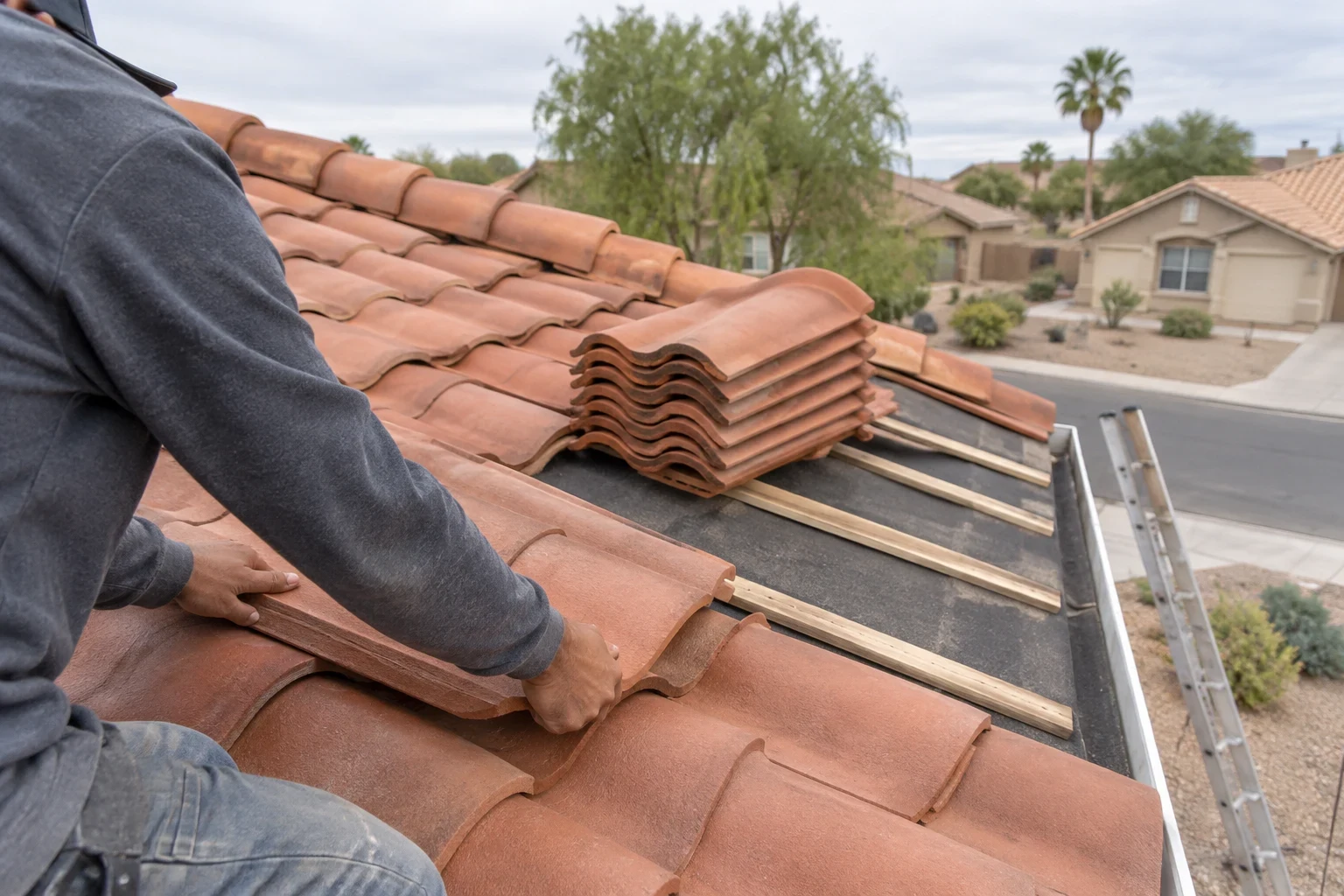
- Each tile is lifted, stacked carefully on the roof, and relaid on new battens where needed. Cracked pieces are swapped out during the relay rather than left in place.
- New concrete or clay tile
- We install new tile roofs in flat, low-profile and S-profile shapes. Concrete is heavier and costs less. Clay holds its color longer and weighs less per piece, though it can be more fragile underfoot.
- Flashing, valleys and penetrations
- Valleys, chimney and wall flashings, and pipe jacks are where tile roofs usually leak first. We replace these metal details while the tile is off instead of patching around them.
- Broken tile repair
- For smaller problems, we replace cracked or slipped tiles and check the underlayment beneath them. We look for matching pieces so a repair does not stand out on the roof.
- Bird stops and eave closure
- Open gaps at the first row of tile invite nesting and debris. We close them with bird stop or eave closure as part of the job.
Signs your tile roof needs attention
Stains on the ceiling
Water spots, especially after a monsoon storm, usually mean the underlayment has failed somewhere. The tile above may look perfectly normal.
Cracked or slipped tiles
Foot traffic from satellite or solar installers often cracks tile. Slipped pieces leave the underlayment exposed to direct sun, which speeds up its breakdown.
Brittle felt at the eaves
If you can see the black underlayment at the edge of the roof and it crumbles when touched, the rest of it is likely in similar shape.
A roof of a certain age
Many original tile roofs were built with felt that has a far shorter life than the tile on top of it. Once a roof has reached its second decade, the underlayment deserves a close look.
Debris packed in valleys
Leaves and dirt that sit in valleys hold water against the metal and the felt. Persistent buildup can point to a valley that needs to be redone.
What moves the price of tile work
Tile jobs vary more than most roofing work, because so much depends on what is under the tile and how much of the tile can be reused. We price from what we actually see on your roof. If we find damaged decking once the tile is off, we show you before doing the extra work.
Roof size and pitch
Larger and steeper roofs take more labor and more care to stage tile safely.
How much tile is salvageable
A reset with mostly intact tile costs far less than buying new. Older or discontinued profiles can be harder to match, which affects the cost of replacements.
Underlayment choice
Heavier felt and premium synthetic membranes handle heat differently and are priced differently. We walk you through the trade-offs.
Valleys, hips and penetrations
Each valley, skylight, vent and wall junction adds flashing work. A cut-up roof costs more than a simple gable.
Deck condition and permits
Rotted sheathing found under old felt must be replaced, and permit requirements add their own step.
How a tile job runs
- 1
Walking the roof and talking it through
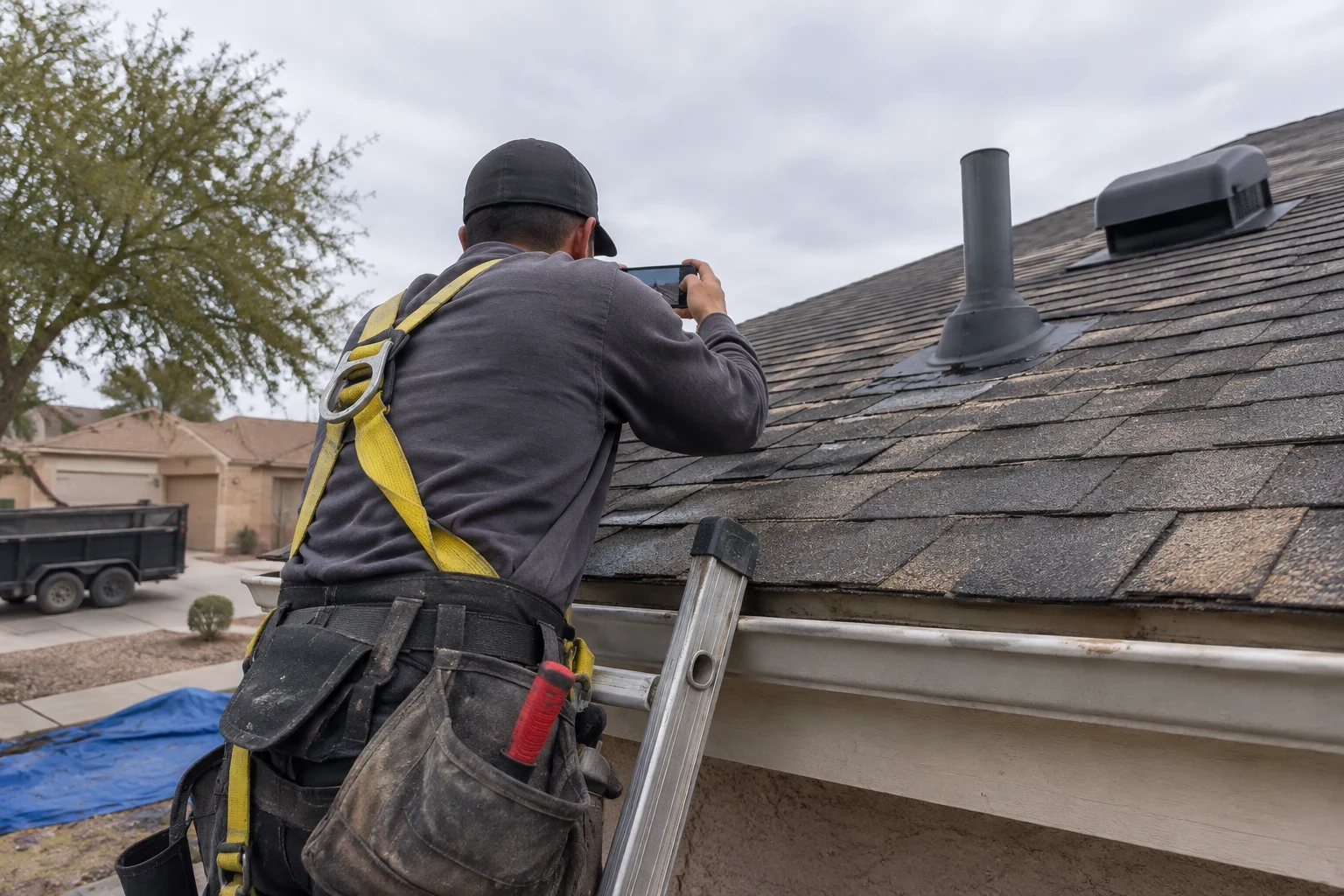
We look at the tile, the exposed underlayment and the flashings, and take photos of what we find. Then we explain whether a reset, a repair or new tile fits your roof, and why.
- 2
A written, line-item estimate
You get the scope in writing: how much tile we expect to salvage, the underlayment we plan to use, flashing work and any replacement tile. We pull the permit where one is required.
- 3
Tear-off and new underlayment
Tile is removed and stacked on the roof, old felt comes off, and we repair any soft decking we find before laying new underlayment. We cover landscaping and keep the work area tidy as we go.
- 4
Relay, cleanup and a final walk
Tile goes back on with new battens and fasteners as needed, followed by ridge and hip pieces. We clean up debris and nails, then walk the finished roof with you.
Tile roofing questions
Can you reuse my existing tile?
Usually, yes. Concrete tile in particular tends to hold up well, and most of it can be relaid after new underlayment goes down. We replace the cracked pieces and tell you up front roughly how much we expect to reuse.
Should I choose concrete or clay tile?
Concrete is the more common choice here and costs less, but it is heavier and its color can fade over time. Clay keeps its color for decades and is lighter, though it costs more and breaks more easily if someone walks on it carelessly. Both suit the heat well; the decision often comes down to look and budget.
Is my roof strong enough for tile?
If your home already has tile, the framing was built for it. Switching from shingles to tile is a different matter, since tile is much heavier, and the structure has to be checked before we recommend it.
How long does a tile reset take?
A typical home takes a few working days, depending on size, pitch and how much decking needs attention. Your home stays covered at the end of each day, and we keep you updated on progress.
Do you work on tile roofs outside Buckeye?
Yes. We also handle tile work in nearby communities such as Goodyear, Litchfield Park and Surprise. Our Service Areas page lists the rest.
Talk about your tile roof with someone who knows it
Tell us what you are seeing, and we will explain whether a repair, a reset or new tile makes the most sense for your home.